Need Installation? Call (908) 752-3846 ~ Shipping available throughout the US
Mobile navigation
Subheading
Your cart is empty
There are no items in your cart.
View
Filters
Price
$ 0
$ 295
Type
More
Less
4 Way Combo Apple
This compact semi-dwarf tree offers four popular apple varieties grafted into its branches. By grafting companions that bloom at the same time, two early and two later, it eliminates the need for a second tree as a pollinator. This tree is great for smaller yards and tight spaces. This variety can produce bushels of apples for you to enjoy from just one small tree. More About Malus '4 in 1 Combo' Large Trees that Produce the First Season You get a bearing age tree that is several years old. Four popular varieties were carefully selected that grow well together. Continuously pruned branches give you more apples at a safe picking height. The thicker branches can mean up to twice the fruit as a normal tree. Interesting Notes: GROWN SAFE™ For your safety and peace of mind, we give you our word that for at least the past twelve months the only pest controls used on our fruit and berries are those listed by the Organic Materials Review Institute (OMR) for organic fruit and berry production. Apple Growing and Maintenance Tips Fertilize in spring with an all-purpose fertilizer before new growth begins. Proper pruning is a must for a combo but is not necessary for the first few years after planting your tree. Most people prune them back to keep a shorter tree. Take care not to get too close to the graft, prune dead or spindly branches. Height: 15-25 FeetSpread: 15-20 FeetSpacing: 25-35 FeetHardiness Zone: 5-8 Malus '4 in 1 Combo' Characteristics Exposure: Full Sun, Partial Sun Soil Moisture: Moist, Well-Drained Attributes: Edible, Drought Tolerant, Heat Tolerant Habit: Upright Season of Interest (Flowering): Spring Season of Interest (Foliage): Summer, Fall
4 Way Combo Cherry
This compact semi-dwarf tree offers four popular Cherry varieties grafted into its branches. By grafting companions that bloom at the same time two early and two blooming later it eliminates the need for a second tree as a pollinator. Great for smaller yards and tight spaces. Some gardeners even grow them in large pots. Bred to be prolific fruiters...you will enjoy an abundance of sweet delicious cherries from even a small tree. More About Prunus '4 in 1 Combo' Cherries are one of the easiest fruit trees to grow. Your 4-in-1 Cherry is self-pollinating, so you don't need a second tree. Large Trees that Produce the First Season You get a bearing age tree that is several years old. The four popular varieties were carefully selected to grow well together. Third generation fruit tree growers have perfected this tree over the decades. Continuously pruned branches give you more cherries at a safe picking height. These thicker branches can mean up to twice the fruit as a normal tree. Interesting Notes: GROWN SAFE™ For your safety and peace of mind, we give you our word that for at least the past twelve months the only pest controls used on our fruit and berries are those listed by the Organic Materials Review Institute (OMR) for organic fruit and berry production. Cherry Growing and Maintenance Tips Fertilize in spring with an all-purpose fertilizer before new growth begins. Proper pruning is a must for a combo but is not necessary for the first few years after planting your tree. Most people prune them back to keep a shorter tree. Take care not to get too close to the graft, prune dead or spindly branches. When fruit begins to ripen protect from birds by placing a thin net over the tree. Height: 15-25 FeetSpread: 15-20 FeetSpacing: 25-35 FeetHardiness Zone: 5-8 Prunus '4 in 1 Combo' Characteristics Exposure: Full Sun, Partial Sun Soil Moisture: Moist, Well-Drained Attributes: Edible, Drought Tolerant, Heat Tolerant Habit: Upright Season of Interest (Flowering): Spring Season of Interest (Foliage): Summer, Fall
Admiration
More About Berberis Thunbergii 'Admiration' Deciduous shrub Vibrant, coral-red leaves with golden-yellow edges from Spring to Fall Red stems for winter interest Ideal for containers, small gardens, borders Drought and deer resistant Compact shape Height: 1-2 FeetSpread: 1-2 FeetHardiness Zone: 4-9 Berberis Thunbergii 'Admiration' Characteristics Exposure: Full Sun to part shade Soil Type: Well draining, tolerates sandy, loamy, clay soils Attributes: Low Maintenance, Thorny texture, bright color, Foliage Color: Coral red, Golden yellow Habit: Compact Season of Interest: Spring- Winter
American
American Boxwood also known as Common Boxwood is a classic evergreen shrub with dense, glossy green foliage that keeps its rich color year- round. Known for its tidy shape and durability, it is perfect for hedges, borders, and foundation plantings, bringing timeless structure and elegance to any landscape. More About Buxus sempervirens 'American' Evergreen Low Maintenance Drought tolerant once established Formal hedges, borders, foundation planting, low screen, topiary, accent Rounded Deer resistant Height: 5-15 FeetSpread: 5-15 FeetHardiness Zone: 5-8 Buxus sempervirens 'American' Characteristics Exposure: Full Sun, Partial Sun Season of Interest: Year round interest Soil Moisture: Average Water Attributes: Rounded Foliage Color: Green Care: After planting, water regularly until roots are established. Pruning the American Boxwood in the late Winter or early Spring, just before new growth, helps to maintain a neat shape while also encourage dense, healthy growth. Avoid pruning late Summer or early Fall since the Winter months can damage soft, new growth. This shrub benefits from early Spring fertilizer although not necessary.
Anthony Waterer
Anthony Waterer Spirea is a dependable, long-blooming shrub that adds elegance and color to any landscape. From late spring through summer, it’s covered in clouds of soft pink flowers, attracting butterflies and pollinators while creating a lush, vibrant display. Its dense, mounded habit grows 3–4 feet tall and wide, providing excellent structure for borders, foundation plantings, or mass plantings. Hardy, low-maintenance, and adaptable to a range of soils, Anthony Waterer® Spirea delivers classic beauty and season-long charm with minimal effort, making it a favorite for both novice and experienced gardeners. More About Spirea 'Anthony Waterer' Low Maintenance Moderate growing Soft pink blooms Drought tolerant once established Foundation planting, mixed border, mixed bed, accent, mass planting Compact mounding Deer resistant Height: 36"-48"Spread: 36"-48"Hardiness Zone: 3-8 Spirea 'Anthony Waterer' Sun Exposure: Full Sun Season of Interest: Spring - Fall Soil Moisture: Average Water, well draining Attributes: Mounding Foliage Color: Bright green Care: After planting, water regularly until roots are established. Shear lightly after first bloom to promote new growth and possible rebloom. Cut back in late Winter to early Spring to maintain dense shape.
Aurea
More About Berberis Thunbergii 'Aurea' Pale lime- green, yellow Deciduous shrub Rounded leaves Border, hedge, container, barrier use Drought and deer resistant Mounding shape Height: 3-4 FeetSpread: 3-5 FeetHardiness Zone: 4-8 Berberis Thunbergii 'Aurea' Characteristics Exposure: Full Sun Soil Type: Well draining, sandy, clay soils, avoid wet areas Attributes: Low Maintenance, Thorny texture Foliage Color: Pale lime green, yellow Habit: Mounding Season of Interest: Spring- Fall
Aureomarginatus
Euonymus japonicus 'Aureomarginatus', or Golden Euonymus is a bold, fast-growing evergreen prized for its glossy green leaves edged in bright golden yellow, delivering instant color and contrast in any landscape. More vigorous than boxwood, it’s ideal for hedges, screens, and foundation plantings where quick coverage and strong visual impact are desired, offering tough reliability and vibrant, year-round appeal. More About Euonymus japonicus 'Aureomarginatus' Evergreen shrub Low Maintenance Drought tolerant once established Hedges, screening, foundation plant, mass planting, specimen shrub Dense, compact, rounded Variegated Deer resistant Height: 8-12 FeetSpread: 6-8 FeetHardiness Zone: 6-9 Euonymus japonicus 'Aureomarginatus' Characteristics Exposure: Full Sun, Part shade Season of Interest: Year-round Soil Moisture: Average Water, well draining Attributes: Dense, compact, rounded Foliage Color: Variegated with green center and golden yellow margins Care: After planting, water regularly until roots are established. Prune as needed to control size and shape. Responds well to trimming.
Big Blue
Liriope muscari 'Big Blue' is a tough, low-maintenance perennial that delivers clean, grass-like texture and reliable color all season long. Forming dense clumps about 12–18 inches tall and wide, it’s perfect for edging, mass plantings, or filling in under trees where other plants struggle. In late summer, it sends up spikes of rich purple flowers that add a pop of color, followed by small dark berries in fall. ‘Big Blue’ thrives in sun to shade, tolerates poor soils, drought, and even salt, making it an ideal choice for both residential and commercial landscapes. Durable, versatile, and deer resistant, it’s a go-to groundcover that looks great with minimal effort. More About Liriope muscari 'Big Blue' Sun and shade loving plant Blooms in late summer Tender Evergreen, could brown up. Shear back for new flush of growth in spring Clumping Habit Mass planting, ground cover, edging, space filler Deer resistant Drought tolerant after roots get established Liriope muscari Growing and Maintenance Tips Spacing: 12-18" (can go tighter to fill in quicker) Plant at soil level Water well to get roots established Pruning: Shear back to about 2-3" in late winter/early spring Height: 12-18"Spread: 12-18"Hardiness Zone: 5-10 Liriope muscari 'Big Blue' Characteristics Exposure: Full Sun- full shade Soil Moisture: adaptable to most soils Attributes: Low Maintenance, Deer resistant, drought tolerant Season of Interest (Flowering): Spring- Fall
Bing
The most popular of all the sweet cherries. Large dark red heart-shaped fruit that is firm, sweet and very juicy. Begin enjoying its fruit in early July. Pollinate with Black Tartarian. Interesting Notes: GROWN SAFE™ For your safety and peace of mind, we give you our word that for at least the past twelve months the only pest controls used on our fruit and berries are those listed by the Organic Materials Review Institute (OMR) for organic fruit and berry production. Bing Cherry Growing and Maintenance Tips Fertilize in spring with an all-purpose fertilizer before new growth begins. Benefits from dormant pruning to create an open vase shape. Remove inward growing branches, crossing branches, broken, dead and diseased branches. Height: 12-20 FeetSpread: 12-20 FeetSpacing: 25-30 FeetHardiness Zone: 5-8 Prunus avium 'Bing' Characteristics Exposure: Full Sun Attracts Wildlife: Attracts Songbirds Soil Moisture: Average Water Attributes: Edible Production: Need a second cherry tree to cross pollinate Habit: Upright Season of Interest (Flowering): Spring
Birthday Cake
More About Buddleja davidii 'Birthday Cake' Butterfly Bush Pink violet flower spikes that stand tall Rebloomer Low Maintenance Deciduous shrub Drought tolerant once established Attracts pollinators and hummingbirds Mass plantings, accent, border, container, perennial garden Upright Deer resistant Height: 4-5 FeetSpread: 2-3 FeetHardiness Zone: 5-9 Buddleja davidii 'Birthday Cake' Butterfly Bush Characteristics Exposure: Part Sun to Sun Soil Type: Moist, well draining Attributes: Low Maintenance Bloom Color: Pink violet in Summer Habit: Upright Season of Interest: Summer through Fall Care: May have a higher success rate when planting in Spring as opposed to Fall with this one since it doesn't particularly like cold, wet Winter months. If planting in a wetter area or soil that retains water (clay) plant this shrub a bit higher. Regular watering in the first growing season helps to establish a strong root system. Be careful not to over water! Deheading is not necessary on this Butterfly Bush. Yearly pruning is helpful to keep blooms at eye level or below. May die back to the ground in cold climates, but rest assured, it will come back beautifully in the Late Spring.
Black Knight
More About Buddleja davidii 'Black Knight' Butterfly Bush Fragrant dark violet flower spikes Low Maintenance Fast growing Deciduous shrub Drought tolerant once established Attracts pollinators and hummingbirds Foundation, mass plantings, accent, border, hedge, seasonal privacy Upright bushy Deer resistant Height: 6-8 FeetSpread: 4-6 FeetHardiness Zone: 5-9 Buddleja davidii 'Black Knight' Butterfly Bush Characteristics Exposure: Part Sun to Sun Soil Type: Moist, well draining Attributes: Low Maintenance Bloom Color: Dark violet in Summer Habit: Upright bushy Season of Interest: Summer through Fall Care: May have a higher success rate when planting in Spring as opposed to Fall with this one since it doesn't particularly like cold, wet Winter months. If planting in a wetter area or soil that retains water (clay) plant this shrub a bit higher. Regular watering in the first growing season helps to establish a strong root system. Be careful not to over water! Deheading is not necessary on this Butterfly Bush. Yearly pruning is helpful to keep blooms at eye level or below. May die back to the ground in cold climates, but rest assured, it will come back beautifully in the Late Spring.
Black Tartarian
This semi-dwarf tree has very dark purplish-red medium sized fruit that ripens early in the season. The flesh of the fruit is tender, very juicy and sweet. Pollinates with Lapins or Bing. Interesting Notes: GROWN SAFE™ For your safety and peace of mind, we give you our word that for at least the past twelve months the only pest controls used on our fruit and berries are those listed by the Organic Materials Review Institute (OMR) for organic fruit and berry production. Black Tartarian Cherry Growing and Maintenance Tips Fertilize in spring with an all-purpose fertilizer before new growth begins. Benefits from dormant pruning to create an open vase shape. Remove inward growing branches, crossing branches, broken, dead and diseased branches. Height: 12-25 FeetSpread: 12-25 FeetSpacing: 30-35 FeetHardiness Zone: 5-8 Prunus avium 'Black Tartarian' Characteristics Exposure: Full Sun Attracts Wildlife: Attracts Songbirds Soil Moisture: Average Water Attributes: Edible Habit: Upright Production: Needs a second cherry tree to cross pollinate Season of Interest (Flowering): Spring
Bloodgood
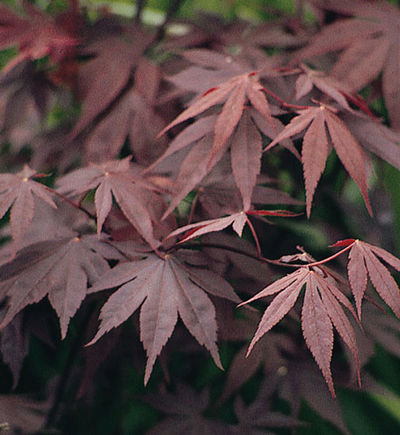
Bloodgoods have bright red leaves in the spring - maturing to a rich purple-red color during the summer - becoming a bright crimson in the fall. This sturdy, deciduous tree makes an excellent selection for nearly any landscape! A vigorous upright grower that becomes rounded with age. Small inconspicuous red flowers in spring followed by red fruit in early fall. This tree retains its color well even during summer heat. More About Acer palmatum 'Bloodgood' Small tree ideal for smaller gardens. Retains color even in hot weather. Brilliant fall color. Winter interest. Interesting Notes: Mainly used as a single specimen; in landscapes the Japanese maple makes a striking display when used to line a driveway, along property lines or in groupings. When used in this way, the recommended spacing for this tree is 20 feet apart. Japanese maple Growing and Maintenance Tips Easily grown in average, medium, well-drained soil in full sun to part shade. Fertilize in spring with an all-purpose fertilizer before new growth begins. Height: 15-20 FeetSpread: 15 FeetSpacing: 20-25 FeetHardiness Zone: 5-8 Acer palmatum 'Bloodgood' Characteristics Exposure: Full Sun, Partial Sun Soil Moisture: Average Water Attributes: Fall Color, Great Foliage, Low Maintenance, Fast Growing, Specimen, Focal Point Foliage Color: Burgundy Habit: Mounding, Upright Season of Interest (Foliage): Summer, Fall, Early Color
Blue Chip Jr
More About Buddleja davidii Lo&Behold 'Blue Chip Jr' Butterfly Bush Dwarf variety of 'Blue Chip' Fragrant blue violet flower spikes Rebloomer Low Maintenance Deciduous shrub Drought tolerant once established Attracts pollinators and hummingbirds Mass plantings, accent, border, container, perennial garden Mounded Deer resistant Height: 18-30"Spread: 18-30"Hardiness Zone: 5-9 Buddleja davidii Lo&Behold 'Blue Chip Jr' Butterfly Bush Characteristics Exposure: Part Sun to Sun Soil Type: Moist, well draining Attributes: Low Maintenance Bloom Color: Blue violet in early Summer Habit: Mounded Season of Interest: Summer through Fall Care: May have a higher success rate when planting in Spring as opposed to Fall with this one since it doesn't particularly like cold, wet Winter months. If planting in a wetter area or soil that retains water (clay) plant this shrub a bit higher. Regular watering in the first growing season helps to establish a strong root system. Be careful not to over water! Deheading is not necessary on this Butterfly Bush. Yearly pruning is helpful to keep blooms at eye level or below. May die back to the ground in cold climates, but rest assured, it will come back beautifully in the Late Spring.
Blue Pacific
Low growing and trailing habit this juniper sports ocean blue-green foliage that keeps its color well in colder weather. Drought, heat, and cold tolerant once established in the landscape. Adaptable to a wide range of soil conditions. Used as foundation planting, around taller shrubs or trees, hillside groundcover and seashore. More About Juniperus Conferta 'Blue Pacific' Ideal for seaside planting. Erosion control. Excellent ground cover. Shade tolerant. Interesting Notes: The shore juniper is a low growing ground cover that adapts well to sandy soil in seashore areas. One of the handsomest of all the ground cover junipers. Excellent when used in mass planting, on banks, draped over retaining walls and in planter boxes. Tolerates shade very well makes it ideal for planting under trees. Blue Pacific Juniper Growing and Maintenance Tips Fertilize in spring with an all-purpose fertilizer before new growth begins. Height: 6-12 inchesSpread: 6-8 FeetHardiness Zone: 5-9 Juniperus Conferta 'Blue Pacific' Characteristics Exposure: Full Sun, Partial Sun Critter Resistance: Deer Resistant Soil Moisture: Average Water Attributes: Low Maintenance, Ground Cover, Fast Growing, Mass Planting, Evergreen, Border or Bed Habit: Trailing
Blue Rug
Very flat growing form with trailing silver-blue branches that take on a light purplish color in winter. Drought, heat, and cold tolerant once established in the landscape. Very adaptable to a wide range of soil conditions. Used to cover vast areas, trail walls and cover hill sides. Great plant for controlling erosion. More About Juniperus horizontalis 'Wiltoni' (Blue Rug Juniper) Toughest evergreen landscape plant available. Spreader covering wide areas. Ideal for hill side or rock garden. Interesting Notes: Low growing and valued for its adaptability to sand and rocky soil. Tolerates hot dry sunny locations. Ideal for slope planting, ground cover and mass planting. Blue Rug Juniper Growing and Maintenance Tips Fertilize in spring with an all-purpose fertilizer before new growth begins. Height: 4 inchesSpread: 8-10 FeetHardiness Zone: 4-9 Juniperus horizontalis 'Wiltoni' Characteristics Exposure: Full Sun Critter Resistance: Deer Resistant Soil Moisture: Average Water Attributes: Rock Garden, Drought Tolerant, Mass Planting, Low Maintenance, Evergreen, Border or Bed, Fast Growing, Ground Cover Habit: Mounding, Trailing Season of Interest (Foliage): Winter, Summer
Blue Star
Nice blue tinted foliage on this dense, low growing rounded evergreen. This juniper is slow growing and does not develop a central leader thus keeping it nice and dense. Adapts to a wide variety of soil conditions. More About Juniperus squamata 'Blue Star' Striking blue color. Mounding habit. Nice accent shrub. Interesting Notes: The Blue Star was developed round 1950 and was essentially unknown. It has become widely used in many landscapes because of it growth habit, versitility and striking color. Blue Star Juniper Growing and Maintenance Tips Fertilize in spring with an all-purpose fertilizer before new growth begins. Height: 3 FeetSpread: 3-4 FeetHardiness Zone: 5-8 Juniperus squamata 'Blue Star' Characteristics Exposure: Full Sun Critter Resistance: Deer Resistant Soil Moisture: Average Water Attributes: Mass Planting, Low Maintenance, Evergreen, Border or Bed Habit: Mounding Foliage Color: Blue Season of Interest (Foliage): Fall, Winter, Summer
Bluecrop
This vigorous grower, brings forth perfectly white bell shaped flowers in the spring. Abundant large light blue, sweet and firm fruit in mid July to early August. This is the leading commercial blueberry variety in North America. Good eaten fresh, cooking, jellies and jams and freezing. More drought resistant and cold-hardy than most other varieties. Dark green leaves turn a bright red in the fall followed by bright red stems in the winter. More About Vaccinium corymbosum 'Bluecrop' Health benefits. Easy to grow. Showy in the landscape. Year around interest. Interesting Notes: GROWN SAFE™ For your safety and peace of mind, we give you our word that for at least the past twelve months the only pest controls used on our fruit and berries are those listed by the Organic Materials Review Institute (OMR) for organic fruit and berry production. Blueberry Growing and Maintenance Tips Fertilize in the spring after blooming with a fertilizer for acid-loving plants. Height: 4-6 FeetSpread: 5 FeetHardiness Zone: 5-7 Vaccinium corymbosum 'Bluecrop' Characteristics Exposure: Full Sun Attracts Wildlife: Attracts Songbirds Soil Moisture: Average Water Attributes: Edible Habit: Upright Season of Interest (Flowering): Spring Season of Interest (Foliage): Fall
Bobo
More About Hydrangea paniculata 'Bobo' Panicle hydrangea Conical bloom shape Deciduous shrub Drought tolerant Blooms on new wood Attracts bees and butterflies Dove white blooms that turn sweet pink in the Fall Border, mass plantings, accent, container, fresh or dried arrangements Compact Deer resistant (not full proof, deer might be attracted to new growth; keep an eye out) Height: 2-3 FeetSpread: 3-4 FeetHardiness Zone: 3-9 Hydrangea paniculata 'Bobo' Characteristics Exposure: Part Sun Soil Type: Well draining Attributes: Low Maintenance Bloom Color: Dove white in Summer months to sweet pink in Fall Habit: Compact Season of Interest: Summer through Fall (some leave spent blooms to collect snow throughout winter months) Care: Deheading is not necessary, however you can prune back by one third to a healthy set of buds and fertilize in early Spring.
Bonanza Gold
More About Berberis Thunbergii 'Bonanza Gold' (Bogozam) Bright lime green to yellow throughout Summer season Deciduous shrub Glossy oval leaves Accent shrub, small gardens, borders, container Drought and deer resistant Compact shape Height: 1-2 FeetSpread: 2-3 FeetHardiness Zone: 4-8 Berberis Thunbergii 'Bonanza Gold' Characteristics Exposure: Full Sun to part shade Soil Type: Well draining, tolerates sandy, loamy, clay soils Attributes: Low Maintenance, Thorny texture, bright color, Foliage Color: Bright lime green to yellow Habit: Compact Season of Interest: Spring- Fall
Braeburn
A semi-dwarf variety, the Braeburn is fairly easy to grow and produces heavily at a young age. This apple is firm to the touch with red-orange vertical stripes against a yellow-green body. Best eaten slightly cooled to bring out the sharp refreshing flavor that has a good balance of tartness and sweetness. Good cooking apple as it holds it shape, also producing a lot of liquid making it ideal for tarts. Stores well when kept chilled. Pollinates with Fugi. Interesting Notes: GROWN SAFE™ For your safety and peace of mind, we give you our word that for at least the past twelve months the only pest controls used on our fruit and berries are those listed by the Organic Materials Review Institute (OMR) for organic fruit and berry production. Braeburn Apple Growing and Maintenance Tips Fertilize in spring with an all-purpose fertilizer before new growth begins. Will cross pollinate with the varieties we offer. To prune an apple tree, start by removing dead, diseased, and broken branches. Then, thin out the canopy by removing downward-growing branches, crossing or rubbing branches, and vigorous upright shoots called "water sprouts". Always make cuts to the branch collar and avoid removing more than one-third of the tree’s canopy in a single pruning session to prevent shocking the tree. Height: 30 FeetSpread: 15 FeetSpacing: 25 FeetHardiness Zone: 5-8 Malus domestica 'Braeburn' Characteristics Exposure: Full Sun Soil Moisture: Average Water Attributes: Edible Production: Considered self pollinating, but benefits from having a second peach tree to cross pollinate Season of Interest (Flowering): Spring
Burbank
A semi-dwarf variety with a flat topped habit that produces an abundance of sweet and juicy fruit suitable for canning, baking, desserts or eating fresh. Will pollinate with Satsuma plum. Interesting Notes: GROWN SAFE™ For your safety and peace of mind, we give you our word that for at least the past twelve months the only pest controls used on our fruit and berries are those listed by the Organic Materials Review Institute (OMR) for organic fruit and berry production. Burbank Plum Growing and Maintenance Tips Fertilize in spring with an all-purpose fertilizer before new growth begins. Benefits from dormant pruning to create an open vase shape. Remove inward growing branches, crossing branches, broken, dead and diseased branches. Height: 15-20 FeetSpread: 10-12 FeetSpacing: 20-25 FeetHardiness Zone: 5-8 Prunus salicina 'Burbank' Characteristics Exposure: Full Sun Soil Moisture: Average Water Attributes: Edible Production: Needs a second plum to cross pollinate Habit: Upright Season of Interest (Flowering): Spring
Burning Bush
Euonymus alatus ‘Compacta’ (Burning Bush) is a dense, low-maintenance shrub prized for its spectacular fall color. Its rich green summer foliage transforms into a brilliant, fiery red in autumn, making it a standout focal point in any landscape. Naturally compact and easy to shape, it’s ideal for hedges, screening, foundation plantings, and mass plantings, thriving in full sun to partial shade with minimal care. More About Euonymus alatus 'Compacta' (Burning Bush) Deciduous shrub Low Maintenance Drought tolerant once established Hedges, screening, foundation plant, mass planting, specimen shrub Dense, compact, rounded Green in Summer, brilliant red in Fall Deer resistant Cold hardy Height: 6-8 FeetSpread: 8-10 FeetHardiness Zone: 4-9 Euonymus alatus 'Compacta' (Burning Bush) Characteristics Exposure: Full Sun, Partial Sun Season of Interest: Fall Soil Moisture: Average Water, well draining Attributes: Dense, compact, rounded Foliage Color: Green in Summer, brilliant red in Fall Care: After planting, water regularly until roots are established. Prune in late Winter or early Spring if reshaping is needed. A light, balanced fertilizer can be used in Spring. If left overgrown and reshaping is needed, you could cut back one third to half of its size and is best done in late Winter before new growth starts. This encourages denser branching and a more compact shape. (Hard prune may reduce Fall color that year, but the shrub will bounce back to its normal fire red the following year).
Chandler
The Chandler ripens mid-July to late August and continues for up to six weeks providing an abundance of large delicious flavored fruit. Good eaten fresh but is mainly used for cooking and freezing. The bush is vigorous with large, dark green foliage and a slightly spreading habit. Fall color is orange-red with red winter stems. More About Vaccinium 'Chandler' Health benefits. Easy to grow. Showy in the landscape. Year around interest. Interesting Notes: GROWN SAFE™ For your safety and peace of mind, we give you our word that for at least the past twelve months the only pest controls used on our fruit and berries are those listed by the Organic Materials Review Institute (OMR) for organic fruit and berry production. Blueberry Growing and Maintenance Tips Fertilize in the spring after blooming with a fertilizer for acid-loving plants. Height: 5 FeetSpread: 6 FeetHardiness Zone: 4-7 Vaccinium 'Chandler' Characteristics Exposure: Full Sun Attracts Wildlife: Attracts Songbirds Soil Moisture: Average Water Attributes: Edible Habit: Upright Season of Interest (Flowering): Summer
Cheyenne Spirit
Echinacea 'Cheyenne Spirit' is a vibrant, long-blooming coneflower that brings bold color and pollinator activity to any sunny landscape. This award-winning variety produces a dazzling mix of rich reds, oranges, yellows, pinks, purples, and creams — all on sturdy, upright stems that resist flopping. Blooming from early summer through fall, it provides months of continuous color while attracting butterflies and beneficial pollinators. Growing 18–30 inches tall, ‘Cheyenne Spirit’ is perfect for perennial borders, mass plantings, and low-maintenance garden beds. Hardy in Zones 4–9 and highly drought tolerant once established, it’s a dependable, deer-resistant choice for adding strong seasonal impact and summer energy to residential or commercial landscapes. More About Echinacea 'Cheyenne Spirit' Perennial. Blooms in summer. Sun loving. Drought tolerant once established Deer resistant Echinacea Growing and Maintenance Tips Prune back at the end of the growing season or leave the seed heads to feed birds during the winter. Height: 18"-24"Spread: 12"-18"Hardiness Zone: 4-9 Echinacea 'Cheyenne Spirit' Characteristics Exposure: Full Sun Soil Moisture: Average soil Attributes: Low Maintenance, Great Foliage, Long Blooming Season of Interest (Flowering): Summer
Concorde
More About Berberis Thunbergii 'Concorde' Deep maroon- purple foliage Spring through Summer that intensifies in the Fall Deciduous shrub Rounded leaves Border, hedge, container, barrier use Drought and deer resistant Compact shape Height: 18-24 InchesSpread: 18-24 InchesHardiness Zone: 4-8 Berberis Thunbergii 'Concorde' Characteristics Exposure: Full Sun Soil Type: Well draining, tolerates sandy, loamy, clay soils, avoid wet areas Attributes: Low Maintenance, Thorny texture Foliage Color: Deep maroon-purple Habit: Round, compact Season of Interest: Spring- Fall
Crimson Pygmy
More About Berberis Thunbergii 'Crimson Pygmy' Burgundy Red Petite yellow flowers in Spring, Red berries in Fall Deciduous shrub Rounded leaves Border, hedge, container, barrier use Drought and deer resistant Mounding shape Height: 2 FeetSpread: 3-4 FeetHardiness Zone: 4-8 Berberis Thunbergii 'Concorde' Characteristics Exposure: Full Sun Soil Type: Well draining, tolerates sandy, loamy, clay soils, avoid wet areas Attributes: Low Maintenance, Thorny texture Foliage Color: Crimson Purple Habit: Mounding Season of Interest: Spring- Fall
Crimson Queen
The new growth on this small Japanese Maple is a bright crimson red that persists through the entire growing season. Finely dissected leaves on handsome cascading branches. Ideal for small gardens and tight spaces. Summer color becomes crimson in the fall. More About Acer palmatum dissectum 'Crimson Queen' Easy to grow. Dwarf variety. Beautiful cascading branches. Year around interest. Interesting Notes: Beginning in the mid-1960s, Acer palmatum variant dissectum forma atropurpureum 'Crimson Queen' was by many regarded as the best dissectum or laceleaf Japanese maple. 'Crimson Queen' is a heavily cascading weeper that forms a more nearly perfect dome & if grown near a ledge or large raised bed can even droop downward lower than its root-crown. Japanese Maple Growing and Maintenance Tips Easily grown in average, medium, well-drained soil in full sun to part shade. Prefers lightly dappled shade. Leaves may scorch in full sun in hot southern summers. Plant in a location protected from strong winds. Stake trunk for more erect growth or leave alone for full cascading effect. When grouping, plant 10 to 15 feet apart. Fertilize in spring with an all-purpose fertilizer before new growth begins. Height: 5 FeetSpread: 10 FeetSpacing: 10-15 FeetHardiness Zone: 5-8 Acer palmatum dissectum 'Crimson Queen' Characteristics Exposure: Full Sun, Partial Sun Soil Moisture: Average Water Attributes: Fall Color, Great Foliage, Low Maintenance, Specimen, Focal Point Foliage Color: Burgundy Habit: Mounding Season of Interest (Foliage): Summer, Fall, Early Color
D'Anjou
Semi-dwarf variety that produces large greenish-yellow fruit with sweet, juicy, white flesh. Good for fresh eating or for cooking. Blooms in mid-April and ripen in September. Pollinator with Luscious. Interesting Notes: GROWN SAFE™ For your safety and peace of mind, we give you our word that for at least the past twelve months the only pest controls used on our fruit and berries are those listed by the Organic Materials Review Institute (OMR) for organic fruit and berry production. D'Anjou pear Growing and Maintenance Tips Fertilize in spring with an all-purpose fertilizer before new growth begins. To prune a pear tree, start by removing dead, diseased, and broken branches. Then, thin out the canopy by removing downward-growing branches, crossing or rubbing branches, and vigorous upright shoots called "water sprouts". Always make cuts to the branch collar and avoid removing more than one-third of the tree’s canopy in a single pruning session to prevent shocking the tree. Prune to create a central leader Height: 12-15 FeetSpread: 12-15FeetHardiness Zone: 4 Pyrus communis 'D'Anjou' Characteristics Exposure: Full Sun Soil Moisture: Average Water Attributes: Edible Production: Will need a second pear to cross pollinate
Dark Knight
Dark Knight Caryopteris (Bluebeard) is a compact, easy-care shrub that delivers vibrant blue flowers in late summer—right when most landscapes need color most. Its silvery green foliage, drought tolerance, and strong appeal to bees and butterflies make it a perfect choice for sunny borders, foundations, and pollinator gardens. Cut back in early spring and enjoy months of bold color with minimal maintenance. More About Caryopteris x clandonensis Dark Knight' Woody perennial shrub Low Maintenance Drought tolerant once established Pollinator gardens, low informal hedge, foundation plant, mixed perennial and shrub border Compact Moderate to fast growing Deer resistant Height: 2-4FeetSpread: 2-4 FeetHardiness Zone: 5-9 Caryopteris x clandonensis Dark Knight' Characteristics Exposure: Full Sun Season of Interest: Late Summer to early Fall Soil Moisture: Lean, well-draining Attributes: Compact Foliage Color: Gray- green foliage with Blue to violet blooms Care: After planting, water regularly until roots are established. Dark Knight benefits from a hard cut back in the early Spring.
Dolgo
More About Malus 'Dolgo' Crabapple Upright, rounded to pyramidal habit Pink buds open to fragrant white flowers One of the earliest crabs to flower Large dusty-red crabapples Vibrant fall foliage Crabapple Growing and Maintenance Tips Larger than normal edible fruits ripen midsummer, making this a good cultivar to use for crabapple jelly. Use as a specimen, in small groups or mixed with other cultivars. Crabapples have visual appeal in the spring with their abundance of showy flowers. Height: 24-30 FeetSpread: 15-20 FeetHardiness Zone: 3-8 Malus 'Dolgo' Characteristics Exposure: Full Sun Attracts Wildlife: Attracts Songbirds Soil Moisture: Average Water Attributes: Specimen, Fragrant, Fall Color Foliage Color: Green, Yellow Habit: Upright Season of Interest (Flowering): Spring
Dorothy Wycoff
A strong growing compact shrub that blooms heavy with dark red buds that open to pale pink. Its new foliage is reddish changing to medium green in summer. Excellent as a focal point in any landscape or can be planted as a small growing hedge. This vigorous grower is one of the nicest forms available. More About Pieris japonica 'Dorothy Wycoff' Shade loving plant. Blooms late winter into spring. Ideal for woodland settings. Single specimen or hedge. Interesting Notes: A native of Asia and Japan and is often referred to as 'andromeda' that originated from an earlier genus name for the plant. Japanese Pieris Growing and Maintenance Tips Fertilize in the spring after blooming with a food for acid-loving plants. Can be harmful if ingested by people or animals. Height: 6 FeetSpread: 3 FeetHardiness Zone: 5-8 Pieris japonica 'Dorothy Wycoff' Characteristics Exposure: Partial Sun Soil Moisture: Average Water Attributes: Low Maintenance, Great Foliage, Long Blooming Season of Interest (Flowering): Summer
Double Play® Candy Corn®
Double Play® Candy Corn® Spirea is a show-stopping shrub that delivers a season-long display of vibrant color with almost no effort. In spring, its new growth bursts out in brilliant shades of red and orange, then matures to rich pineapple-yellow, creating a striking multicolor effect all on one plant. Early summer brings clusters of vivid purple flowers that attract butterflies and pollinators, adding even more charm to your landscape. Compact, low-maintenance, and deer resistant, this hardy shrub thrives in full sun and fits perfectly in borders, foundation plantings, or patio containers. If you’re looking for bold color, easy care, and nonstop visual interest, Double Play® Candy Corn® Spirea is the sweet addition your garden needs. More About Spirea 'Double Play® Candy Corn®' Low Maintenance Moderate growing Drought tolerant once established Foundation planting, mixed border, mixed bed, accent, mass planting, container Compact Deer resistant Height: 18"-24"Spread: 18"-24"Hardiness Zone: 3-8 Spirea 'Double Play® Candy Corn®' Characteristics Exposure: Full Sun Season of Interest: Spring - Fall Soil Moisture: Average Water, well draining Attributes: Rounded mound Foliage Color: Warm red- orange new growth turning to sweet pineapple yellow in summer Care: After planting, water regularly until roots are established. Shear lightly after first bloom to promote new growth and possible rebloom. Cut back in late Winter to early Spring to maintain dense shape.
Double Play® Dolly Spires®
Double Play® Dolly Spires® Spirea is a compact, upright flowering shrub prized for its vibrant color and tidy habit. Bright red new growth emerges in spring, maturing to rich green foliage that beautifully contrasts with clusters of vivid purple flowers in early to mid-summer. its naturally narrow, spire-like form makes it perfect for foundation plantings, mass plants, and mixed borders. Easy to grow, deer resistant, low maintenance, Dolly Spires adds bold seasonal color and reliable performance to any landscape. More About Spirea 'Double Play® Dolly Spires®' Low Maintenance Fast growing Drought tolerant once established Foundation planting, mixed border, accent, mass planting Compact Upright Deer resistant Height: 18"-30"Spread: 18"-30"Hardiness Zone: 3-8 Spirea 'Double Play Dolly Spires®' Characteristics Exposure: Part to Full Sun Season of Interest: Spring - Fall Soil Moisture: Average Water, well draining Attributes: Tidy, upright Foliage Color: Brilliant red turning to Rich, dark green Care: After planting, water regularly until roots are established. Shear lightly after first bloom to promote new growth and possible rebloom. Cut back in late Winter to early Spring to maintain dense shape.
Double Play® Doozie®
Double Play® Doozie® is a true garden standout, delivering nonstop color from spring through fall with almost no effort. This compact, mounded shrub bursts with vibrant red new growth that matures to rich green, then erupts in bold purple-red blooms that keep coming all season—no deadheading needed! Heat tolerant, deer resistant, and easy to grow, it’s perfect for borders, foundation plantings, and containers. If you’re looking for long-lasting color and low-maintenance beauty, Double Play® Doozie® Spirea is a do-it-all favorite that lives up to its name. More About Spirea 'Double Play® Doozie®' Low Maintenance Moderate growing Drought tolerant once established Foundation planting, mixed bed, accent, mass planting, container Compact Deer resistant Height: 24"-36"Spread: 24"-36"Hardiness Zone: 3-8 Spirea 'Double Play® Doozie®' Characteristics Exposure: Full Sun Season of Interest: Spring - Fall Soil Moisture: Average Water, well draining Attributes: Rounded mound Foliage Color: Brilliant red new growth turning to rich green in summer Care: After planting, water regularly until roots are established. Shear lightly after first bloom to promote new growth and possible rebloom. Cut back in late Winter to early Spring to maintain dense shape.
Double Play® Gold
Double Play® Gold Spirea is a vibrant, easy-care shrub that delivers nonstop color from spring through summer. Electric golden foliage emerges in early spring and holds its bright tone all season, creating the perfect backdrop for clusters of vivid pink flowers in late spring and early summer. Compact, durable, and deer resistant, it thrives in full sun and adapts to a wide range of soils. Ideal for foundation plantings, mass plantings, or adding bold contrast to mixed beds, Double Play Gold is dependable, high- impact choice for customers who want strong color without high maintenance. More About Spirea 'Double Play® Gold' Low Maintenance Fast growing Drought tolerant once established Foundation planting, mixed bed, accent, mass planting Compact Deer resistant Height: 18"-24"Spread: 18"-24"Hardiness Zone: 3-8 Spirea 'Double Play® Gold' Characteristics Exposure: Part to Full Sun Season of Interest: Spring - Fall Soil Moisture: Average Water, well draining Attributes: Rounded mound Foliage Color: Bright electric golden- yellow, sometimes chartreuse Care: After planting, water regularly until roots are established. Shear lightly after first bloom to promote new growth and possible rebloom. Cut back in late Winter to early Spring to maintain dense shape.
Duke
Blueberry ‘Duke’ has medium to large light blue berries with a mildly sweet flavor is quite firm and retains its fresh quality longer than most berries. Duke blooms late but produces fruit in early July. The berries can be eaten fresh, good for cooking and freezing. This upright grower is one of the heaviest, most consistent producers. Fall color is yellow-orange. More About Vaccinium 'Duke' Health benefits. Easy to grow. Showy in the landscape. Year around interest. Interesting Notes: GROWN SAFE™ For your safety and peace of mind, we give you our word that for at least the past twelve months the only pest controls used on our fruit and berries are those listed by the Organic Materials Review Institute (OMR) for organic fruit and berry production. Blueberry Growing and Maintenance Tips Fertilize in the spring after blooming with a fertilizer for acid-loving plants. Height: 5 FeetSpread: 5 FeetHardiness Zone: 5-8 Vaccinium 'Duke' Characteristics Exposure: Full Sun Attracts Wildlife: Attracts Songbirds Soil Moisture: Average Water Attributes: Edible Habit: Upright Season of Interest (Flowering): Summer
Duke's Garden
Cephalotaxus harringtonia ‘Duke Gardens’ is one of the best evergreen alternatives to boxwood and yew for tough conditions—especially shade. Its soft, dark green needle-like foliage creates a dense, mounded form that stays clean and natural without constant pruning. Extremely deer resistant, heat tolerant, and adaptable, it thrives where many evergreens struggle. If you need a low-maintenance, shade-tolerant evergreen with a refined look, this is a standout choice. More About Cephalotaxus harringtonia ‘Duke Gardens’ Evergreen Thrives where boxwoods struggle Low Maintenance Drought tolerant once established Low hedges and borders, foundation planting, woodland, natural bed, mass planting Deer resistant Shade loving Height: 3-4 FeetSpread: 4-5 FeetHardiness Zone: 6-9 Cephalotaxus harringtonia ‘Duke Gardens’ Characteristics Exposure: Part shade, full shade Season of Interest: Year round interest Soil Moisture: Average Water Attributes: Compact Foliage Color: Green Care: After planting, water regularly until roots are established. Minimal pruning required- prune in Spring if needed.
Dwarf Alberta Spruce Spiral
Dwarf Alberta Spruce Spiral is a unique evergreen topiary that adds elegant structure and year-round color to any landscape or container. Carefully trained into a graceful spiral form, this compact conifer features dense, bright green needles and a naturally tidy habit. Slow growing and low maintenance, it typically reaches 6–8 feet tall over time and thrives in full sun with well-drained soil. Perfect for framing entryways, patios, or formal gardens, the Dwarf Alberta Spruce Spiral provides a classic, architectural look that works beautifully in both traditional and modern landscapes. More About Picea glauca 'Conica (spiral)' Evergreen Topiary Slow growing Low maintenance Attracts pollinators Deer resistant Compact Single specimen, container, formal garden, decorative focal point Growing and Maintenance Tips Planting: Prefers full sun, but will tolerate part sun. Accepts a variety of soils once the roots have been established. Watering: Consistent water until roots are established. Fertilizing: Applying a slow- release fertilizer in early spring can help encourage healthy growth and rich green color. Pruning: Pruning needs are minimal. Light trim any stray growth. Disease & Pest Care: Spider mites: the most common issue with Dwarf Alberta Spruce. Most prevalent during hot, dry weather. Symptoms include yellowing needles, browning interior foliage, or fine webbing between branches. Regular spraying with stream of water or insecticidal soap or horticultural oil can help control infestations. Needle Cast & Fungal Issues:In areas with poor air circulation or excess moisture, spruce may occasionally develop needle cast or fungal diseases, which cause needles to turn brown and drop. Proper spacing and avoiding overhead watering can help prevent these problems. Height: 5-7 FeetSpread: 2-3 FeetHardiness Zone: 2-8 Picea glauca 'Conica (spiral)' Characteristics Exposure: Full Sun, Partial Sun Soil Moisture: Average Water, needs well draining soil Attributes: Low Maintenance, focal point Habit: Compact upright Season of Interest: Year-round
Dwarf Globe Blue Spruce
This compact, globe-shaped evergreen shrub features a dense, tidy growth habit that makes it an ideal choice for smaller landscapes, container gardening, or as an accent in garden beds. Its striking, silvery-blue needles provide a stunning contrast to other plants and stay vibrant throughout the year, becoming even more intense in the summer. Perfect for creating a focal point or adding texture to your outdoor space, the Dwarf Globe Blue Spruce thrives in well-drained soil and enjoys full to partial sun. Low-maintenance and hardy, this charming shrub is a must-have for those seeking a unique, long-lasting addition to their garden design. Height: 5 FeetSpread: 6 FeetHardiness Zone: 2-8 Picea pungens 'Globosa' Characteristics Exposure: Full Sun, Partial Sun Critter Resistance: Deer Resistant, Rabbit Resistant Soil Moisture: Moist, Well-Drained Attributes: Evergreen Foliage Color: Blue, Silver
Echinacea Purpurea
Echinacea purpurea commonly known as Purple Coneflower, is a hardy native perennial prized for its classic daisy-like blooms and long-lasting summer color. Large rosy-purple petals surround a prominent coppery-orange cone, creating a bold yet natural look in garden beds and meadow-style plantings. Blooming from early summer into fall, it attracts butterflies and pollinators while also providing seed heads that birds enjoy in winter. Growing 2–4 feet tall with a sturdy, upright habit, Purple Coneflower thrives in full sun and well-drained soil. Drought tolerant once established and deer resistant, it’s a dependable, low-maintenance choice for adding vibrant color and native beauty to residential and commercial landscapes. More About Echinacea Purpurea Perennial. Blooms in summer. Sun loving. Drought tolerant once established Deer resistant Echinacea Growing and Maintenance Tips Prune back at the end of the growing season or leave the seed heads to feed birds during the winter. Height: 24"-48"Spread: 18"-24"Hardiness Zone: 4-9 Echinacea Purpurea Characteristics Exposure: Full Sun Soil Moisture: Average soil Attributes: Low Maintenance, Great Foliage, Long Blooming Season of Interest (Flowering): Summer to Fall
Edward Goucher
Edward Goucher is a long-blooming, semi-evergreen shrub prized for its soft lavender-pink trumpet-shaped flowers that appear from late spring through fall. Growing about 4-6 feet tall and 5 feet wide, it has a graceful, arching habit with glossy green foliage that often develops bronze or purplish tones in cooler weather. It thrives in full sun to partial shade and is both heat and drought tolerant once established. Excellent for foundations, borders, or mass plantings, Edward Goucher Abelia adds reliable color and low-maintenance beauty to the landscape. More About Abelia 'Edward Goucher' Showy lavender flowers. Semi-evergreen. Attracts pollinators and hummingbirds Deer resistant Compact and maintenance free. Soft color for brightening up darker areas. Single specimen, foundation or short border hedge, mass planting Abelia Growing and Maintenance Tips Planting: Abelia prefer full sun, but will tolerate part sun/light shade. Accepts a variety of soils. Prefers well draining Watering: Consistent water until roots are established. Fertilizing: In the spring after the last frost, fertilize with a well-balanced, slow-release fertilizer. Pruning: Blooms on new wood. Prune late winter or early spring to maintain shape. Height: 3-5 FeetSpread: 3-5 FeetHardiness Zone: 6-9 Abelia 'Edward Goucher' Characteristics Exposure: Full Sun, Partial Sun Soil Moisture: Average Water Attributes: Low Maintenance, Mass Planting, Semi- evergreen Habit: Arching Season of Interest (Flowering): Spring to Fall
Elberta
This dwarf peach is the most disease resistant peach tree available. Beautiful rose-red blooms in spring with large yellow fruit in mid-August. Eaten fresh but best known for canning. Full to partial sun, widely adaptable to different soil types. Self-pollinating. Interesting Notes: GROWN SAFE™ For your safety and peace of mind, we give you our word that for at least the past twelve months the only pest controls used on our fruit and berries are those listed by the Organic Materials Review Institute (OMR) for organic fruit and berry production. Elberta peach Growing and Maintenance Tips Fertilize in spring with an all-purpose fertilizer before new growth begins. Stake tree to keep it up right until established usually one year after planting then remove staking promptly. Benefits from dormant pruning to create an open vase shape. Remove inward growing branches, crossing branches, broken, dead and diseased branches. Trim back excessive growth by one third. Height: 14 FeetSpread: 8-9 FeetHardiness Zone: 5-8 Prunus persica 'Elberta' Characteristics Exposure: Full Sun Soil Moisture: Average Water Attributes: Edible Habit: Upright Production: Considered self pollinating, but benefits from having a second peach tree to cross pollinate Season of Interest (Flowering): Spring
Emerald Green
Thuja occidentalis ‘Smaragd’ Emerald Green Arborvitae is a popular evergreen prized for its dense, rich green foliage and naturally narrow, upright shape. Growing about 12–15 feet tall and 3–4 feet wide, it makes an excellent choice for privacy screens, hedges, and foundation plantings where vertical interest is desired without taking up much space. Its vibrant color holds well through winter, unlike many other arborvitae varieties. Emerald Green thrives in full sun to partial shade and prefers well-drained soil, making it a dependable, low-maintenance option for residential and commercial landscapes. Ideal for creating clean, formal lines or year-round privacy. More About Thuja occidentalis 'Emerald Green' Hardy, evergreen tree Perfect for compact privacy screen Foliage is a deep lustrous green Pleasantly fragrant Emerald Green Growing and Maintenance Tips Planting: Plant in full sun to partial shade. At least 6 hours of sun per day will produce the densest growth and richest green color. Prefers well-drained soil. Arborvitae do not like standing water, so avoid low areas where water collects. If soil is heavy clay, loosen the soil around the planting hole to improve drainage. Dig a hole 2–3 times wider than the root ball but no deeper than the root ball height. The top of the root ball should sit slightly above the surrounding soil to prevent settling and root rot. Apply 2–3 inches of mulch around the base to help retain moisture and regulate soil temperature. Keep mulch a few inches away from the trunk. In windy areas, winter burn can occur. Keeping plants well-watered in fall and using mulch helps protect roots through winter. Watering: For the first month after planting, water your tree every other day with a generous soak with the hose at the base of the tree. For the next 6 months, water the same way once a week unless it is dry and hot. Fertilizing: Feed your arborvitae at the beginning of each spring with a balanced, slow release fertilizer. Pruning: If your tree has space to maintain its naturally elegant pyramid shape, no pruning is necessary. However, if you are growing them closely together as a hedge, you can shear them annually after the last frost. Height: 12-15 FeetSpread: 3-4 FeetSpacing: 30-36" (for privacy fence)Hardiness Zone: 3-8 Thuja occidentalis 'Emerald Green' Characteristics Exposure: Full Sun Critter Resistance: Deer will be attracted to this variety Soil Moisture: Average Water Attributes: Specimen, Drought Tolerant, Mass Planting, Cold Tolerant, Evergreen, slow- moderate Growing, Great Foliage, Low Maintenance Foliage Color: Dark Green, Green Habit: Upright
Fastigiata
Cephalotaxus harringtonia ‘Fastigiata’ is a unique upright evergreen that gives you height and structure in areas where most evergreens struggle—especially shade. Its vertical, columnar growth habit makes it perfect for narrow spaces, screening, and adding height without taking up much width. With soft, dark green foliage and excellent deer resistance, it’s a low-maintenance alternative to yews and boxwoods for tougher landscape spots. More About Cephalotaxus harringtonia ‘Fastigiata’ Evergreen Low Maintenance Drought tolerant once established Vertical accent, privacy, foundation corners Deer resistant Slow to moderate growth rate Shade loving Height: 8-10 FeetSpread: 3-5 FeetHardiness Zone: 6-9 Cephalotaxus harringtonia ‘Fastigiata’ Characteristics Exposure: Part shade, full shade Season of Interest: Year round interest Soil Moisture: Average Water Attributes: Upright columnar Foliage Color: Green Care: After planting, water regularly until roots are established. Minimal pruning required- prune in Spring if needed.
Faulkner
Buxus microphylla 'Faulkner' is one of the most reliable compact boxwoods for clean, structured landscapes. Its naturally rounded, dense form makes it perfect for low hedges and foundation plantings without constant trimming. The rich green foliage holds its color well through winter, and its hardy nature makes it a great choice for Northeast climates. If you want a classic boxwood look that stays tight and manageable, ‘Faulkner’ is a go-to option. More About Buxus microphylla 'Faulkner' Evergreen Low Maintenance Drought tolerant once established Low hedges and borders, foundation planting, mass planting, accent, container Naturally rounded Deer resistant Height: 3-4 FeetSpread: 3-4 FeetHardiness Zone: 6-9 Buxus microphylla 'Faulkner' Characteristics Exposure: Full Sun, Partial Sun Season of Interest: Year round interest Soil Moisture: Average Water Attributes: Rounded Foliage Color: Green Care: After planting, water regularly until roots are established. Pruning this boxwood in the late Winter or early Spring, just before new growth, helps to maintain a neat shape while also encourage dense, healthy growth. Avoid pruning late Summer or early Fall since the Winter months can damage tender, new growth. This shrub benefits from early Spring fertilizer although not necessary.
Fire Light Tidbit
More About Hydrangea paniculata 'Fire Light Tidbit' Panicle hydrangea Mophead blooms Deciduous shrub Drought tolerant Blooms on new wood Attracts bees and butterflies Soft white blooms that turn bright pink to red in the Fall Border, mass plantings, accent, container, fresh or dried arrangements Compact Deer resistant (not full proof, deer might be attracted to new growth; keep an eye out) Height: 2-3 FeetSpread: 2-3 FeetHardiness Zone: 3-9 Hydrangea paniculata 'Fire Light Tidbit' Characteristics Exposure: Part Sun Soil Type: Well draining Attributes: Low Maintenance Bloom Color: Soft white in Summer months to bright pink pink in Fall Habit: Compact Season of Interest: Summer through Fall (some leave spent blooms to collect snow throughout winter months) Care: Deheading is not necessary, however you can prune back by one third to a healthy set of buds and fertilize in early Spring.
Firepower
More About Nandina domestica 'Firepower' Cool blue-green foliage that turns fire red throughout Fall and Winter Evergreen shrub A textured foliage tapering gradually to a narrow point Border, mass plantings, hedge, container Deer resistant Drought resistant once established Mounding Height: 24-30 InchesSpread: 24-30 InchesHardiness Zone: 6-11 Nandina domestica 'Firepower' Characteristics Exposure: Full Sun Soil Type: Well draining, tolerates sandy, loamy, clay soils Attributes: Low Maintenance Foliage Color: Green to Red Habit: Mounding Season of Interest: All Season
Next